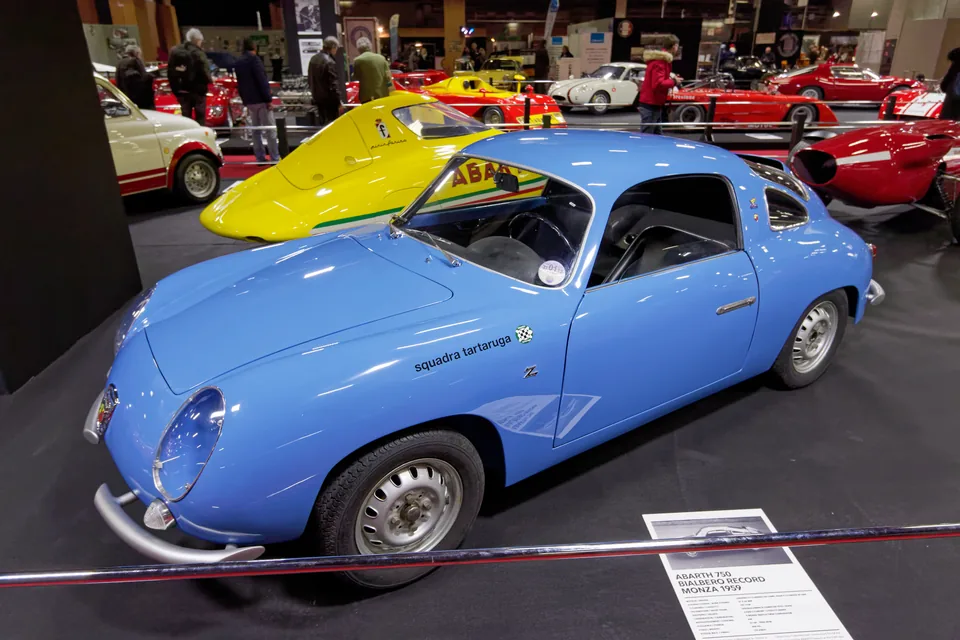
Fiat-Abarth 750 Record Monza
Why 2.9: Zagato's follow-up to the double-bubble 750 GT dropped the double bubble entirely — a lower, single-scoop roofline over the same 747cc Bialbero twin-cam — and traded on the name of a genuinely separate feat: a dedicated streamliner that set 15 endurance records at Monza in July 1957. Abarth built 100 of these production Record Monzas to homologate the shape; nearly all now live in collections.
Layout
Natural habitat
Ride comfort
Sound
The Bialbero twin-cam head sharpens the little 750 into something far shriller than the pushrod cars, and the racing exhaust is barely silenced at all. But three-quarters of a litre carries only so far — a high, thin scream with no body to it.
4-cylinder · naturally aspirated · 7,000 rpm redline · rated 6.9 / 10 for engine sound
Market value
Median asking price, good condition · €3k (1958) → €120k (2026), trending up · illustrative data
Child seats · ISOFIX
Built before ISOFIX existed, so there are no anchor points at all. A child seat here is a seatbelt installation in the only passenger seat there is.
Derived from production years and seating layout, not a per-car source. ISOFIX was standardised as ISO 13216 in 1997, required on new EU model types from 2011 and on all new EU cars from 2014.
The long version
The Monza in the name refers to an actual, separate car: in July 1957 Abarth funded a purpose-built, Pininfarina-bodied streamliner on a tube frame, ran it at the Monza oval for four straight days, and came away with 15 new international records, including a 165.4 km/h average held for 72 continuous hours. That publicity was too good not to sell, so in 1958 Abarth updated the existing 750 GT Zagato racer — same 747cc engine, same double-bubble body from a distance — and relaunched it as the '750 Record Monza Zagato,' capitalizing on the record run's name for a completely different, roadgoing production car. Look closely and the two 750 Zagatos aren't the same shape at all: the Record Monza's roofline sits lower with no double bubble, just a single centered air scoop, because this version standardized the twin-cam Bialbero head — 57 hp at 7,000 rpm — that had only been an option on the base car. Abarth built the first Bialbero series to exactly 100 units, enough to homologate the car for Gran Turismo racing, and it went on to become one of the most successful small-bore Abarths in American club racing through the Franklin D. Roosevelt Jr. team, part of a marque total north of 700 race wins worldwide in this era. Values track the wider Zagato-bodied Abarth market closely: six figures for a documented, correctly specified example, with the distinctive low roofline the single easiest way to tell a genuine Record Monza from the more common double-bubble GT it's constantly confused with.