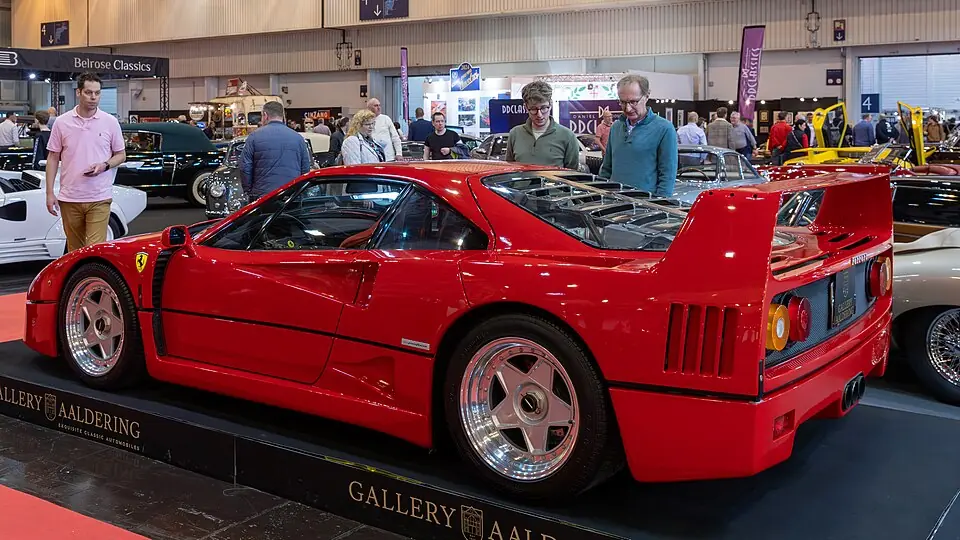
Ferrari F40
Why 3.3: Twin turbos, kevlar, no ABS and no apologies — Doug's joint-highest Weekend score ever. Seven-figure values mean the sharpest analog Ferrari mostly appreciates in silence.
Layout
Natural habitat
Ride comfort
Sound
Wastegate chatter, induction roar and no insulation at all, in a car with sliding plastic windows. Turbocharging costs it the top end a great NA engine would give, but nothing else on this list feels so mechanically unfiltered.
8-cylinder · turbocharged · 7,750 rpm redline · rated 8.5 / 10 for engine sound
Market value
Median asking price, good condition · €304k (2000) → €2.7M (2026), trending up · illustrative data
Child seats · ISOFIX
Built before ISOFIX existed, so there are no anchor points at all. A child seat here is a seatbelt installation in the only passenger seat there is.
Derived from production years and seating layout, not a per-car source. ISOFIX was standardised as ISO 13216 in 1997, required on new EU model types from 2011 and on all new EU cars from 2014.
The long version
Enzo Ferrari signed off on this as the rawest car the company could legally sell, no carpet, no radio, barely any sound deadening, and the market has spent thirty years converting that rawness into a reason to never risk it. Values are up roughly ninefold since 2000, with the steepest climb in just the last decade, and a car appreciating that fast gets trailered to concours events rather than driven to them. Garage Queen is the only badge it needs; the irony is that nothing in the specification argues for storage, everything in the price does. The owners who still drive it hard trade real money for the privilege every mile.