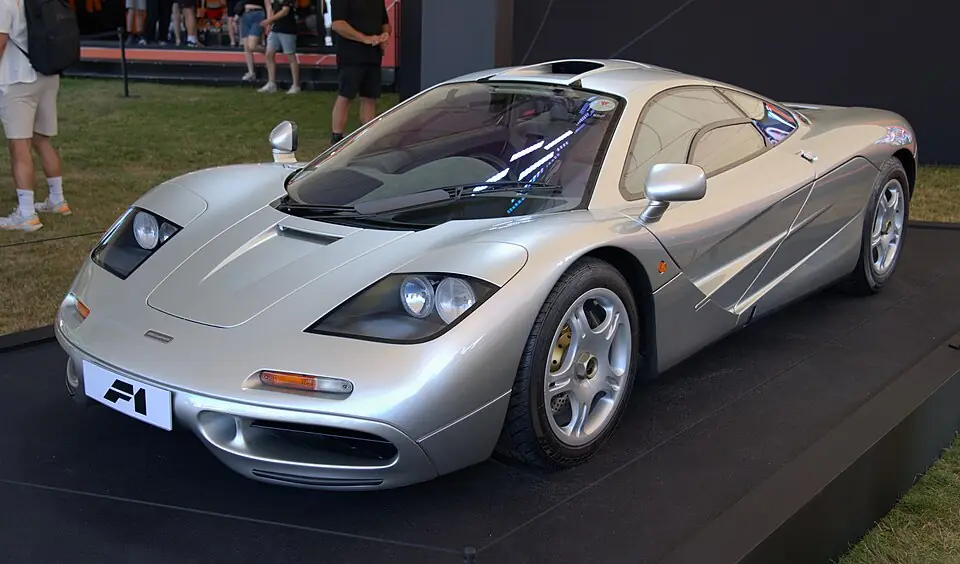
McLaren F1
Why 3.8: Center seat, NA V12, gold-lined engine bay — the consensus greatest road car ever built. At $21M nobody buys one to drive it; the owners who do make headlines precisely because it's newsworthy.
Layout
Natural habitat
Ride comfort
Sound
A naturally aspirated BMW V12 in a gold-lined bay with no sound deadening anywhere, because Murray deleted it to save weight. Marginally below the top three only because 7,500 rpm gives it less range to sing through than a modern screamer.
12-cylinder · naturally aspirated · 7,500 rpm redline · rated 9.3 / 10 for engine sound
Market value
Median asking price, good condition · €736k (2000) → €19.3M (2026), trending up · illustrative data
Child seats · ISOFIX
None. The F1 seats three, but as a central driver flanked by two outriggers — there is no row behind.
No anchors. The car predates ISOFIX, and the seats are shallow composite buckets set back beside the driver rather than conventional passenger seats.
Three seats and no way to mount a child seat properly is about as pure a statement of intent as a car can make.
McLaren F1 central-seat layout, 1992–1998
The long version
The value chart alone explains the ownership pattern: a car worth roughly 800 grand in 2000 is worth 21 million now, and at that kind of appreciation almost nobody who owns one thinks of themselves as a driver first, they think of themselves as a trustee. The handful who do put miles on it become minor celebrities in the enthusiast press specifically because it is so rare; a car this good, this analog, sitting mostly unused is the whole tragedy the Garage Queen badge is built to capture. F1 DNA is earned outright, gold-lined engine bay and all, the hardware never stopped being a 10, only the chance to feel it did.