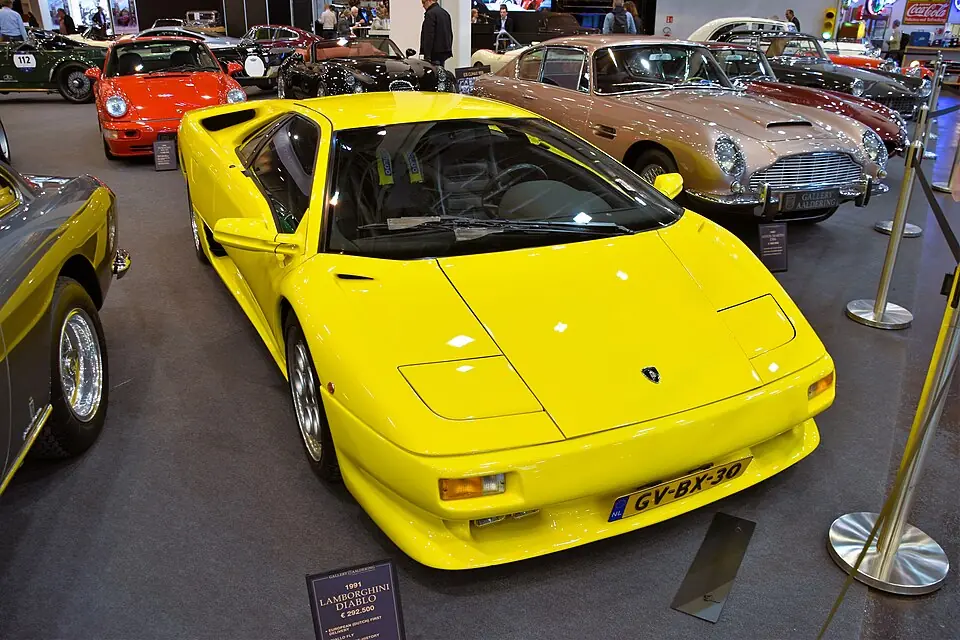
Lamborghini Diablo
Why 3.5: Analog V12, gated manual, zero assists and terrible visibility — driving one is an event with consequences. Values and fragility keep annual mileage in the hundreds.
Layout
Natural habitat
Ride comfort
Sound
The 60-degree V12 sits directly behind the bulkhead with almost nothing damping it, and it gets harder and more layered all the way to 7,500. It gives away 500 rpm and a generation of intake tuning to the Murcielago, which is all that separates the two here.
12-cylinder · naturally aspirated · 7,500 rpm redline · rated 9.1 / 10 for engine sound
Market value
Median asking price, good condition · €138k (2000) → €368k (2026), trending up · illustrative data
Child seats · ISOFIX
There aren't any — strict two-seater.
The only position there is — and the weak point of this era. Airbag cut-off switches only became routine in the mid-2000s; many of these cars have none from the factory, which rules out a rear-facing seat entirely unless a dealer-fitted deactivation was installed. Forward-facing on the belt, seat slid fully back, is what the period manuals allow.
Derived from production years and seating layout, not a per-car source. ISOFIX was standardised as ISO 13216 in 1997, required on new EU model types from 2011 and on all new EU cars from 2014.
The long version
This is a childhood poster made real by someone with both the cash and the nerve, and the nerve part matters more than people expect: no traction control, no ABS on early cars, and sightlines that make parallel parking a spectator sport. Values have roughly tripled since the early 2000s trough, so a scrape now costs real money instead of just pride, and owners have adjusted their driving accordingly. It wears Garage Queen honestly: the fantasy was buying it, not necessarily using it, and the fragility gives everyone a ready-made excuse to leave it covered under a fitted car cover.