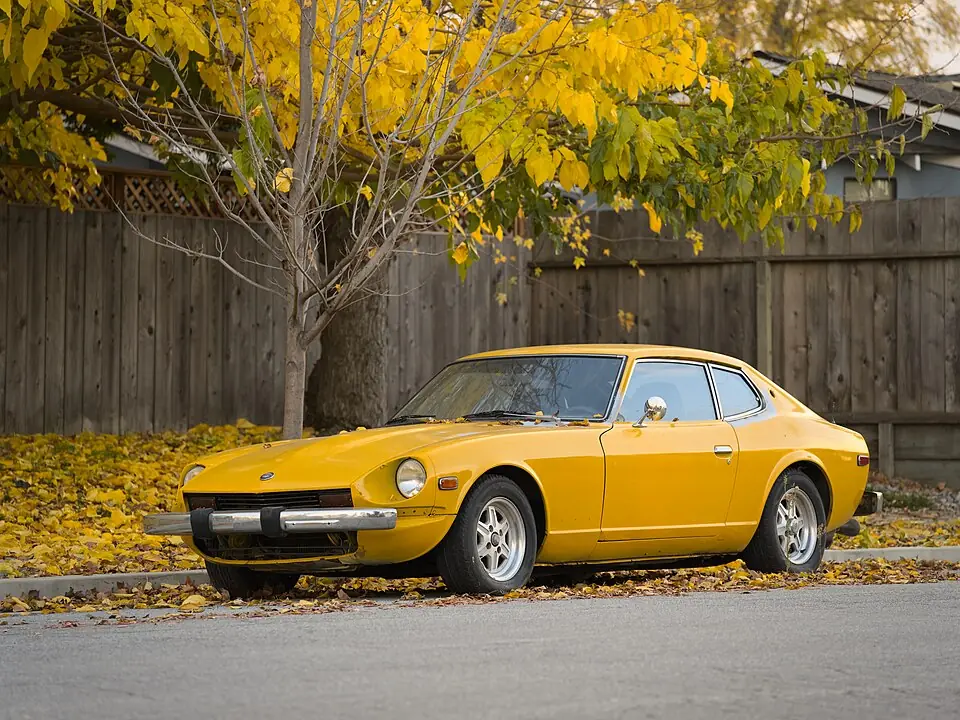
Datsun 240Z
Why 4.5: Japan's first world-beater — cheap, gorgeous, rust-prone. Survivors went collector a decade ago, but the L24's song still gets exercised at sunrise events.
Layout
Natural habitat
Ride comfort
Sound
Twin SU carburettors on a 2.4 straight-six give a deep breathy induction honk under load that no injected six reproduces. But the L24 is a single-cam design revving to 7,000, so it never sharpens into a wail. Character from the intake side rather than the exhaust.
6-cylinder · naturally aspirated · 7,000 rpm redline · rated 6.8 / 10 for engine sound
Market value
Median asking price, good condition · €11k (2000) → €51k (2026), trending up · illustrative data
Child seats · ISOFIX
Built before ISOFIX existed, so there are no anchor points at all. A child seat here is a seatbelt installation in the only passenger seat there is.
Derived from production years and seating layout, not a per-car source. ISOFIX was standardised as ISO 13216 in 1997, required on new EU model types from 2011 and on all new EU cars from 2014.
The long version
Rust did more curating than any collector ever could — most 240Zs that left the factory in the 1970s are gone, and what survived split into two camps: numbers-matching restorations chasing L24 authenticity, and driver-focused rebuilds that don't mind an engine swap if it means actually using the car instead of trailering it. Values have climbed steadily as the surviving pool shrinks, putting real pressure on the second group to start behaving like the first. It's early enough in that transition that plenty of owners still treat it as a classic to drive rather than an asset to protect.