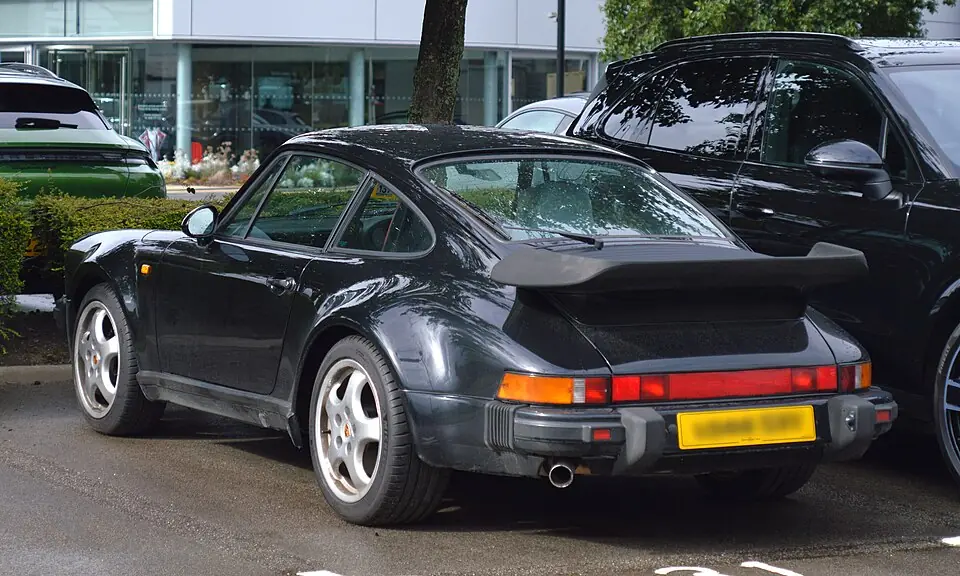
Porsche 911 (964)
Why 4.8: The air-cooled boom tripled values in a decade and cut median mileage in half. The cars that still get driven get driven hard — the split between tools and trophies runs through every owners' club meeting.
Layout
Natural habitat
Ride comfort
Sound
No water jacket to damp it and a cooling fan spinning in the middle of the noise, so the air-cooled 3.6 is all metallic whirr and mechanical thrash, identifiable from a street away. It stops at 6,800 and stays gruff rather than musical, which caps it below the 992 GT3.
6-cylinder · naturally aspirated · 6,800 rpm redline · rated 7.9 / 10 for engine sound
Market value
Median asking price, good condition · €35k (2000) → €120k (2026), trending up · illustrative data
Child seats · ISOFIX
Built before ISOFIX existed, so there are no anchor points at all. A child seat here is a seatbelt installation, and the belt geometry of the period was not designed with one in mind.
Derived from production years and seating layout, not a per-car source. ISOFIX was standardised as ISO 13216 in 1997, required on new EU model types from 2011 and on all new EU cars from 2014.
The long version
This was the affordable air-cooled 911 for most of its life, the one people bought specifically to drive because a 930 or a long-hood car was already priced out of reach, and a lot of that generation of owner is still behind the wheel, unbothered by what the car is now worth. The newer buyers, arriving after values more than tripled since 2016, tend to be more careful, more concerned with matching-numbers paperwork than exhaust note. No badges attach because the fleet is genuinely split rather than tipping either way, which is itself the story: not fully decided between classic-to-drive and asset-to-store.