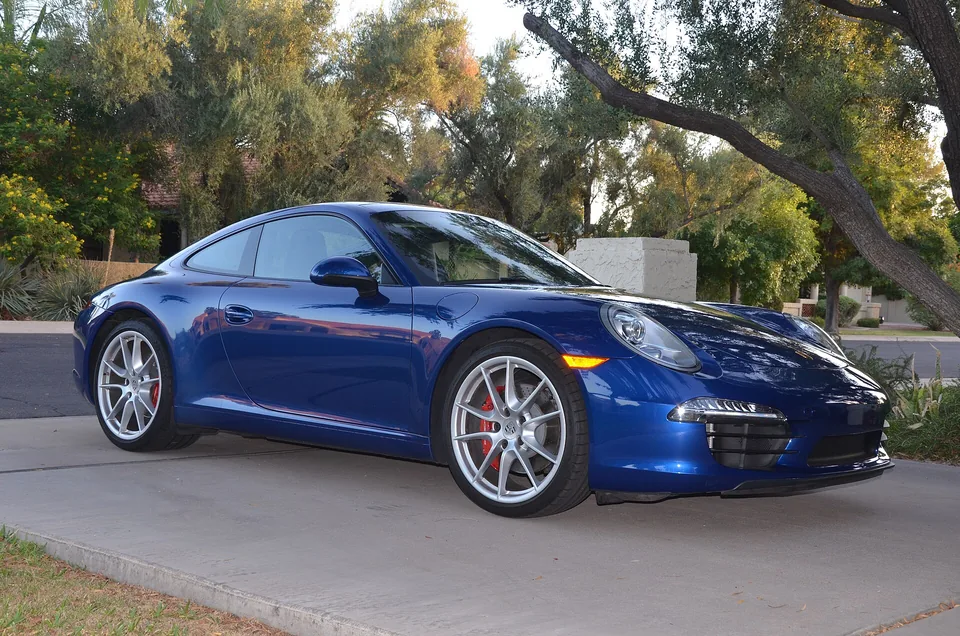
Porsche 911 Carrera S (991.1)
Why 7.6: A 3.8-litre flat-six with 400 hp and a 7,800 rpm redline, 20-inch wheels, the bigger red-calipered brakes and the option of Porsche Torque Vectoring with a mechanical limited-slip differential. It was the fast 911 for people who were never going to buy a GT3, and it still is.
Layout
Natural habitat
Ride comfort
Sound
A 3.8 with 400 hp and a 7,800 rpm redline, and with the optional sports exhaust fitted the overrun crackle is mechanical rather than programmed. Short of the GT3 because the induction path is quieter and it stops 1,200 rpm earlier. The point at which the ordinary 911 last sounded better than the one that replaced it.
6-cylinder · naturally aspirated · 7,800 rpm redline · rated 7.4 / 10 for engine sound
Market value
Median asking price, good condition · €88k (2012) → €66k (2026), trending down · illustrative data
Child seats · ISOFIX
Two ISOFIX positions on the outer rear seats — jump seats, so the question is whether the seat physically fits behind a front occupant, not whether the anchors are there.
The rear anchors are the supported route — the manual points child seats there, and front-passenger ISOFIX is the exception rather than the rule. A belt-mounted seat up front needs the airbag off, and cars with a rear row don't always fit a deactivation switch, precisely because the rear seats exist.
Derived from production years and seating layout, not a per-car source. ISOFIX was standardised as ISO 13216 in 1997, required on new EU model types from 2011 and on all new EU cars from 2014.
The long version
The S has always been the volume 911 at the upper end of the range, and the 991.1 version was the last to breathe on its own. At launch it was reviewed as the 911 that had grown up — longer, quieter, with electric steering the purists mourned — and it sold in enormous numbers to people who used it as a daily. Then the 991.2 arrived with turbochargers and the market reread this car. Values stopped falling around 2020 and the manual cars have crept up since, because a naturally aspirated 400 hp flat-six with three pedals is not something Porsche sells any more outside the GT department. The population still drives, which is why it scores where it does: PDK cars dominate and they carry real mileage, while a growing slice of the manuals has moved into climate-controlled storage beside the 997 GT3s. It sits a notch below the base car on the index for that reason, not because anybody likes it less.