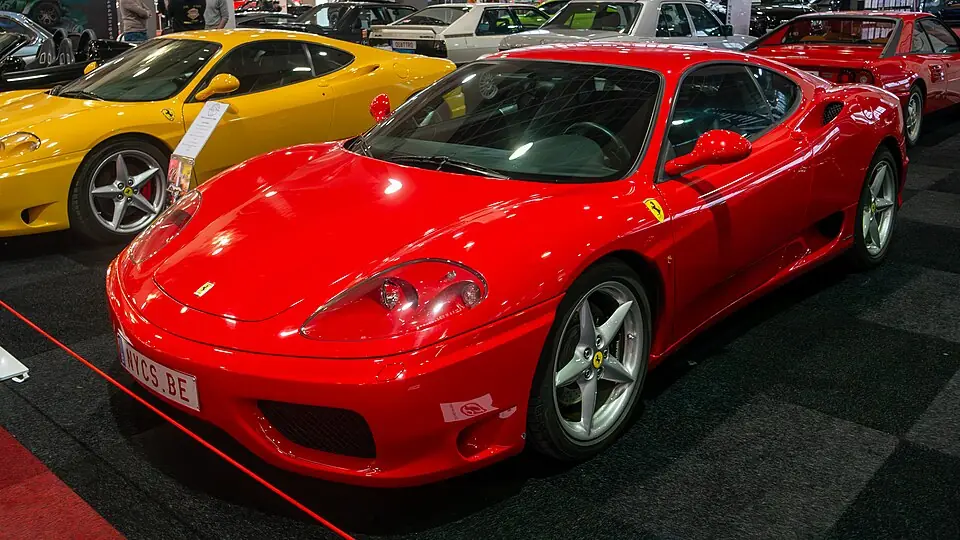
Ferrari 360 Modena
Why 5.3: The first alloy-chassis Ferrari made in real numbers, which kept prices humane and cars on the road for two decades. The gated manuals departed for collections; the F1 cars still work weekends.
Layout
Natural habitat
Ride comfort
Sound
The 3.6 flat-plane V8 sits under glass behind your head and screams to 8,500 with nothing muffling the intake trumpets. It falls short of the Speciale only because the 360 keeps its road-car insulation and stops 500 rpm sooner. A genuinely great engine.
8-cylinder · naturally aspirated · 8,500 rpm redline · rated 9.1 / 10 for engine sound
Market value
Median asking price, good condition · €138k (2003) → €110k (2026), trending down · illustrative data
Child seats · ISOFIX
There aren't any — strict two-seater.
A passenger airbag deactivation switch was offered — fitted on the centre tunnel on early cars, moved to the dash on later ones — as optional equipment, not standard across all cars.
360 Modena owner's manual and enthusiast documentation (360f1.com, PistonHeads) (owner-community sourced, not manufacturer documentation)
The long version
For a generation of buyers, this was the car that made Ferrari ownership arithmetic actually work — production volume kept purchase prices reasonable long before belt-service costs and depreciation reality set in, and a lot of first-time Ferrari owners cut their teeth here rather than on something older and pricier. The cambelt interval still functions as a natural filter, weeding out anyone unwilling to budget for upkeep, which has kept the surviving fleet in the hands of people who use the car enough to justify the bill. It remains the volume Ferrari that still behaves like a used car.