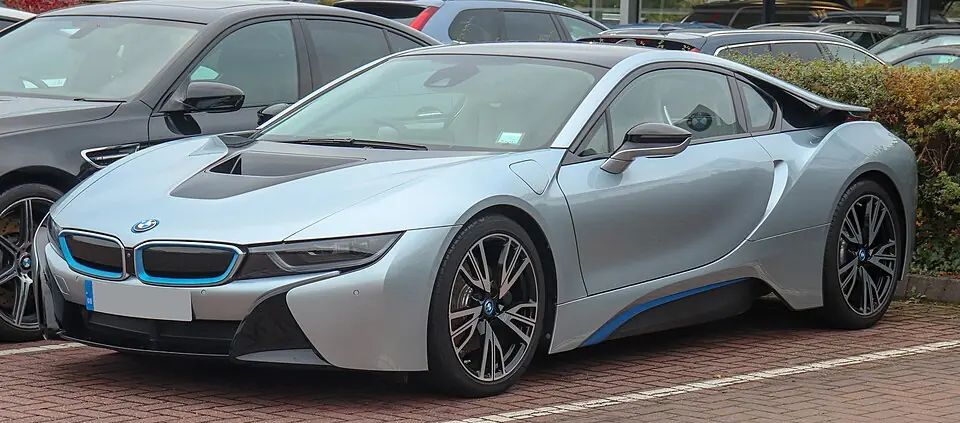
BMW i8
Why 4.3: BMW piped a synthesized engine note through the speakers because the actual turbocharged three-cylinder and electric motor underneath didn't sound like the future the carbon-fiber body promised. It is the clearest example in this index of a car bought to be seen in, not driven hard.
Layout
Natural habitat
Ride comfort
Sound
A three-cylinder augmented through the cabin speakers to impersonate something larger — and it fools nobody who has heard the real thing. Scored on honesty as much as volume: the engine itself is unremarkable and the car knows it.
3-cylinder · turbocharged · 6,000 rpm redline · rated 3.0 / 10 for engine sound
Market value
Median asking price, good condition · €126k (2014) → €59k (2026), trending down · illustrative data
Child seats · ISOFIX
Both rear seats of the 2+2 have ISOFIX anchors under hinged seatback covers plus top-tether points on the rear shelf; BMW's own parts catalog lists a dedicated Isofix child-seat-mount component for the i8.
No ISOFIX hardware on the front passenger seat — owners report no ISOFIX base fits there.
Deep, steeply raked rear cushions make many child seats a tight or awkward fit despite the anchors being present.
BMW parts catalog (i8 ISOFIX child-seat mounts, p/n 72117337846); Cars.com Car Seat Check (owner-community sourced, not manufacturer documentation)
The long version
The scissor doors and carbon-fiber tub promised a driver's car; the turbocharged three-cylinder and its piped-in soundtrack delivered something closer to a striking design statement that happens to move quickly in a straight line. Values fell by more than half within a few years of launch, a steeper drop than most of its hybrid contemporaries, as the initial technology premium wore off faster than BMW expected. What is left today is a genuinely cheap used exotic that mostly gets bought by people drawn to the shape rather than what it asks of a driver, and the ownership data reads accordingly: low miles, low track-day presence, a design object that happens to have doors.