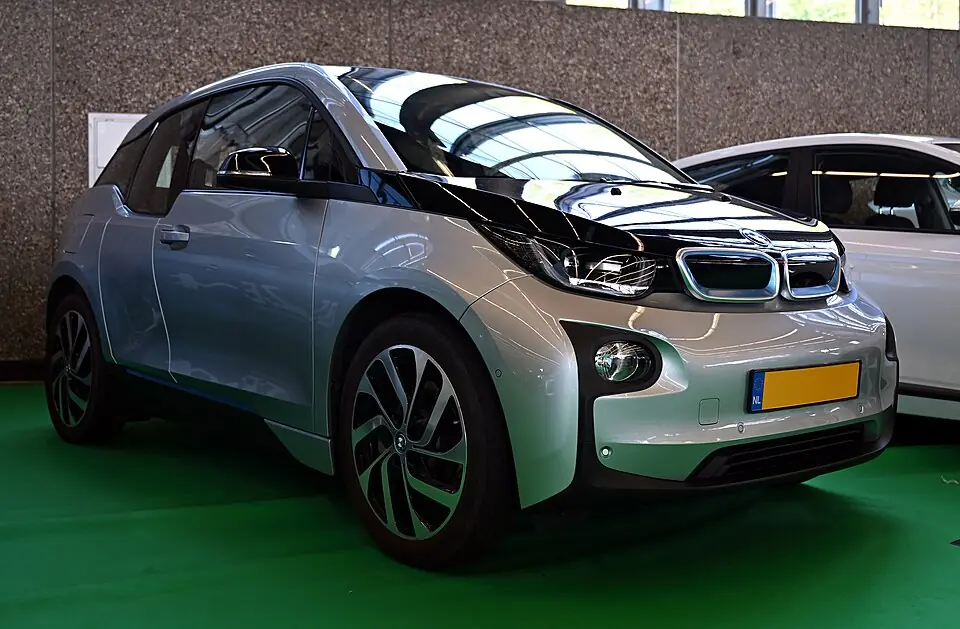
BMW i3
Why 6.8: 170 hp and a one-speed reduction gear give it brisk, silent torque, but the real trick is the carbon-fiber tub: RWD, narrow tires, genuinely tossable in a way no other city EV bothers with. Values collapsed fast, so what's left is a cult of owners who use it exactly as designed.
Layout
Natural habitat
Ride comfort
Sound
The rear motor whine is clean and the cabin is genuinely quiet, which was always the brief. But there is no composed sound layer at all — a pedestrian chime, and on range-extender cars a thrashy 647cc scooter twin. Bottom of the index with the other EVs.
electric · rated 0.6 / 10 for engine sound
Market value
Median asking price, good condition · €41k (2014) → €6k (2026), trending down · illustrative data
Child seats · ISOFIX
Two rear seats (no middle, coach-door 4-seat layout) — both ISOFIX-equipped, part of how BMW marketed the i3's family-friendly packaging despite the unusual door arrangement.
No front-passenger ISOFIX, matching BMW's universal pattern for this era.
Rear-hinged half-doors need the front door opened first — doesn't affect ISOFIX fitment but does affect loading a child seat.
General BMW i3 family-practicality reviews; no i3-specific BMW compatibility document located (owner-community sourced, not manufacturer documentation)
The long version
BMW spent carbon-fiber-supercar money engineering a city car nobody asked for, built an entire dedicated factory process around it, and the result depreciated like any other short-range first-generation EV — which is exactly why the ownership pattern flipped from novelty purchase to genuine daily-driver cult. RWD and a narrow track were unusual choices for a commuter EV, and BMW's chassis engineers used them properly, so what's left is oddly fun to drive fast around a roundabout. Nobody buys a decade-old i3 to flip it; the used-market price already did the flipping for them.