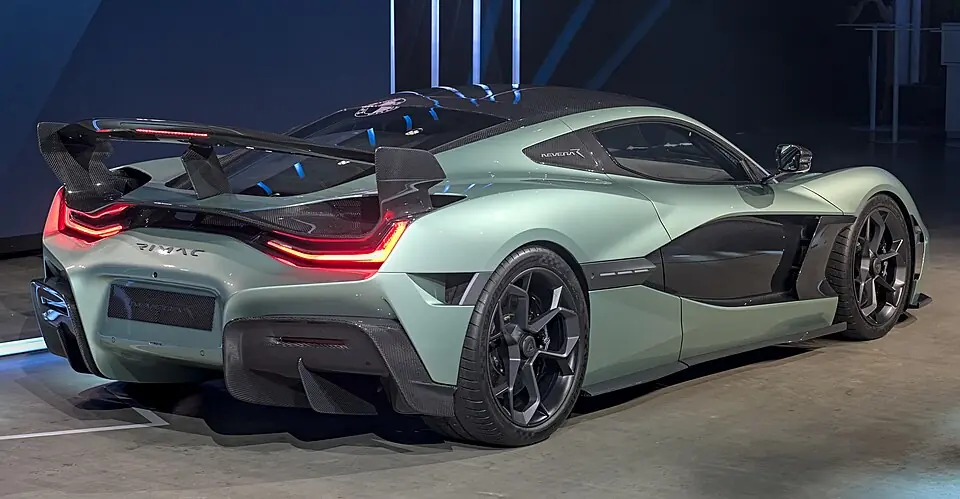
Rimac Nevera
Why 2.3: The fastest-accelerating production car ever built, bought almost exclusively as a technological artifact. Doug scored it 72; the delivery-mileage listings score it here.
Layout
Natural habitat
Ride comfort
Sound
Four motors and 1,900 hp producing a rising electrical shriek that is genuinely strange to hear at that speed. Fascinating, briefly, and still essentially silence with a whine on top.
electric · rated 0.5 / 10 for engine sound
Market value
Median asking price, good condition · €2M (2022) → €1.7M (2026), trending down · illustrative data
Child seats · ISOFIX
There aren't any — strict two-seater.
The only position there is, so makers of this era equip it: expect a passenger-airbag cut-off (key switch or occupant sensing) as standard, because there is no rear row to point children to. Whether the seat itself carries ISOFIX anchors is maker-specific — Porsche bundles them with its child-seat preparation, Ferrari sold them as an option, others are belt-mount only with the airbag off.
Derived from production years and seating layout, not a per-car source. ISOFIX was standardised as ISO 13216 in 1997, required on new EU model types from 2011 and on all new EU cars from 2014.
The long version
At this price the buyer isn't cross-shopping a sports car, they're adding a rolling technology demonstration to a collection that already has several similar trophies, and the delivery-mileage listings that keep surfacing say plenty about how often the case gets opened. Doug's numbers say the chassis and steering are genuinely good underneath the spec-sheet figures, which makes the low use a buyer-behavior problem rather than a car problem — nobody's exploring what the engineering can actually do. Values have already started sliding even at seven figures, unusual for a hypercar this new, suggesting the collector conviction is thinner than the acceleration numbers predict.