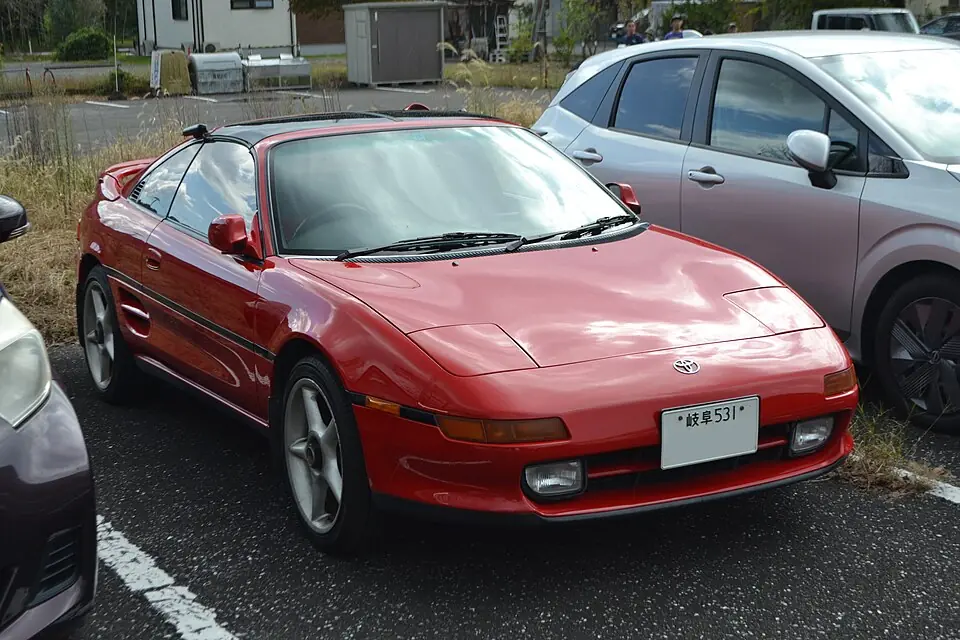
Toyota MR2 (SW20)
Why 6.0: Mid-engine balance at hatchback money, plus the famous snap-oversteer curriculum. Still cheap enough to be driven like Toyota intended — the affordable mid-engine slot nothing modern fills.
Layout
Natural habitat
Ride comfort
Sound
The 3S-GTE sits directly behind the seats with only a thin bulkhead, so spool and dump-valve chatter are unusually present. But the engine is a plain two-litre four on a standard Toyota exhaust. An interesting location wrapped around an ordinary noise.
4-cylinder · turbocharged · 7,000 rpm redline · rated 5.2 / 10 for engine sound
Market value
Median asking price, good condition · €7k (2000) → €37k (2026), trending up · illustrative data
Child seats · ISOFIX
There aren't any — strict two-seater.
Production ran 1989-1999, entirely before ISOFIX (ISO 13216 standardized 1999, EU-mandated fitment mid-2000s) existed as factory equipment — no lower-anchor provision is documented for this generation in any market.
Passenger airbag fitment itself changed mid-generation — pre-1994 cars had none at all, only later cars gained one — so airbag presence is year-dependent before child-seat compatibility even becomes a question.
Pre-ISOFIX production timeline (1989-1999); MR2 owner-forum airbag-introduction history (owner-community sourced, not manufacturer documentation)
The long version
Nobody buys an SW20 to park it — values are still low enough that owning one is a decision measured in weekend track-day fees, not appreciation math. It has become an unofficial finishing school for lift-off oversteer, a car a lot of drivers learn a hard lesson from once and then either sell cheap or keep forever out of respect. The community skews toward people who wrench their own timing belts and would rather spend the savings on tires than paint correction — a mid-engine chassis treated like the beater it was always priced to be.