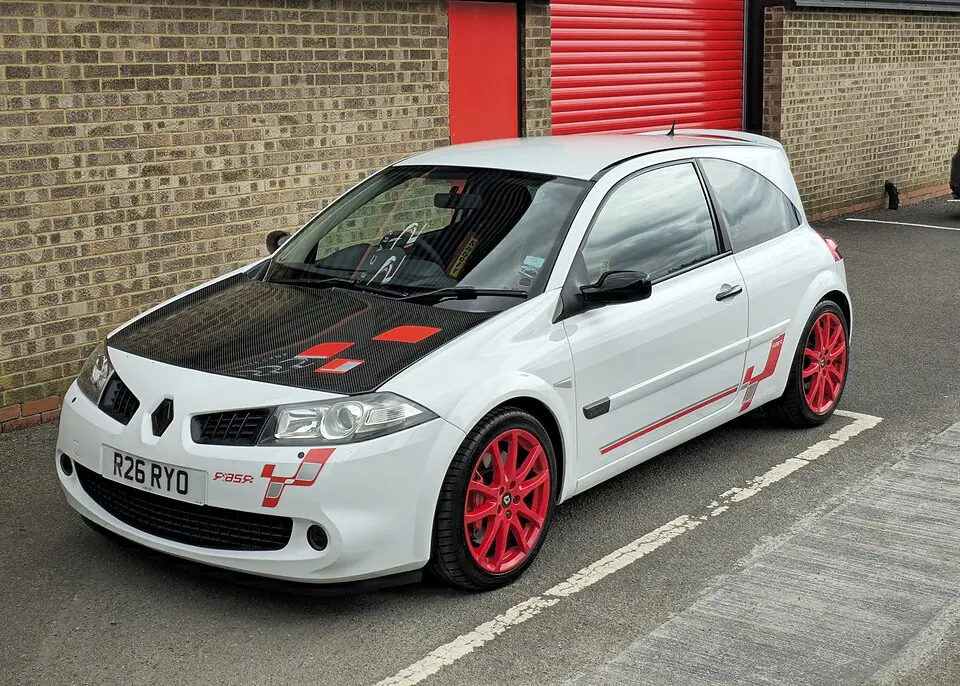
Renault Mégane R26.R
Why 5.5: Polycarbonate windows, a cage instead of rear seats, and a Ring record that embarrassed sports cars. Most of the 450 still get tracked — collector interest exists, but the cars refuse to sit still.
Layout
Natural habitat
Ride comfort
Sound
Renault deleted the rear seats, the sound deadening and the rear glass, so everything the F4Rt does arrives unmuffled, along with the road. But the engine is a two-litre turbo four with a boosted, flat top end. Raw rather than tuneful.
4-cylinder · turbocharged · 7,000 rpm redline · rated 6.2 / 10 for engine sound
Market value
Median asking price, good condition · €28k (2009) → €55k (2026), trending up · illustrative data
Child seats · ISOFIX
There aren't any — strict two-seater.
Fixed carbon-shell Sabelt competition seats with 6-point harness mounts replace the standard chairs; no ISOFIX fitment is mentioned anywhere in the launch coverage of this stripped-out special.
The weight-saving diet deleted the rear seats and belts, the curtain airbags, and the passenger airbag itself — there's no airbag left to switch off.
Renault official press release, via AUSmotive.com and PistonHeads coverage (owner-community sourced, not manufacturer documentation)
The long version
It never came to the US, so American interest in the R26.R is mostly theoretical — the real ownership story plays out at European trackdays, where a car built to strip 100kg out of a hot hatch keeps finding owners willing to live with the compromises that made the diet possible. No back seats, no stereo, a cage where comfort used to be: a spec sheet that scares off casual buyers and self-selects for the ones who will actually use it. Nostalgia pricing is creeping in as the originals age, but the paddock sightings have not slowed down to match.