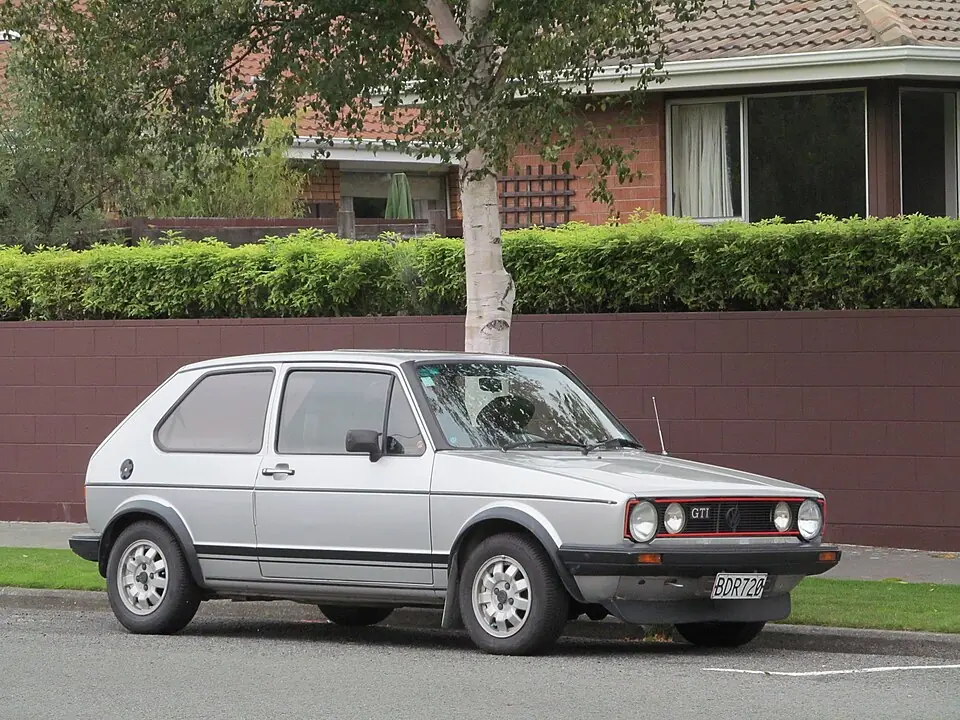
VW Golf GTI (Mk1)
Why 5.5: Every hot hatch since is a footnote to this. Values finally went classic, but the community that kept them alive keeps driving them — patina over concours, always.
Layout
Natural habitat
Ride comfort
Sound
A light, mechanical four with an audible induction rasp when extended and a thin single-box exhaust that suits it. But 1.6 or 1.8 litres and modest silencing leave nothing to build on above 6,000 rpm. Historically vital, acoustically unremarkable.
4-cylinder · naturally aspirated · 6,800 rpm redline · rated 5.0 / 10 for engine sound
Market value
Median asking price, good condition · €4k (2000) → €29k (2026), trending up · illustrative data
Child seats · ISOFIX
Built before ISOFIX existed, so there are no anchor points at all. A child seat here is a seatbelt installation, and the belt geometry of the period was not designed with one in mind.
Derived from production years and seating layout, not a per-car source. ISOFIX was standardised as ISO 13216 in 1997, required on new EU model types from 2011 and on all new EU cars from 2014.
The long version
The Mk1 GTI crowd is old enough now to have handed cars down a generation, and a fair number of survivors are still driven by someone who either bought one new or grew up riding in one — provenance measured in family history, not paperwork. Concours money has arrived for the rare unmolested examples, but the base of the pyramid is still weekend-warrior owners doing their own timing-belt jobs and taking the small-bumper hatch to the diner on a Sunday. It invented the formula every hot hatch since gets graded against, and it is still living the life it was built for.