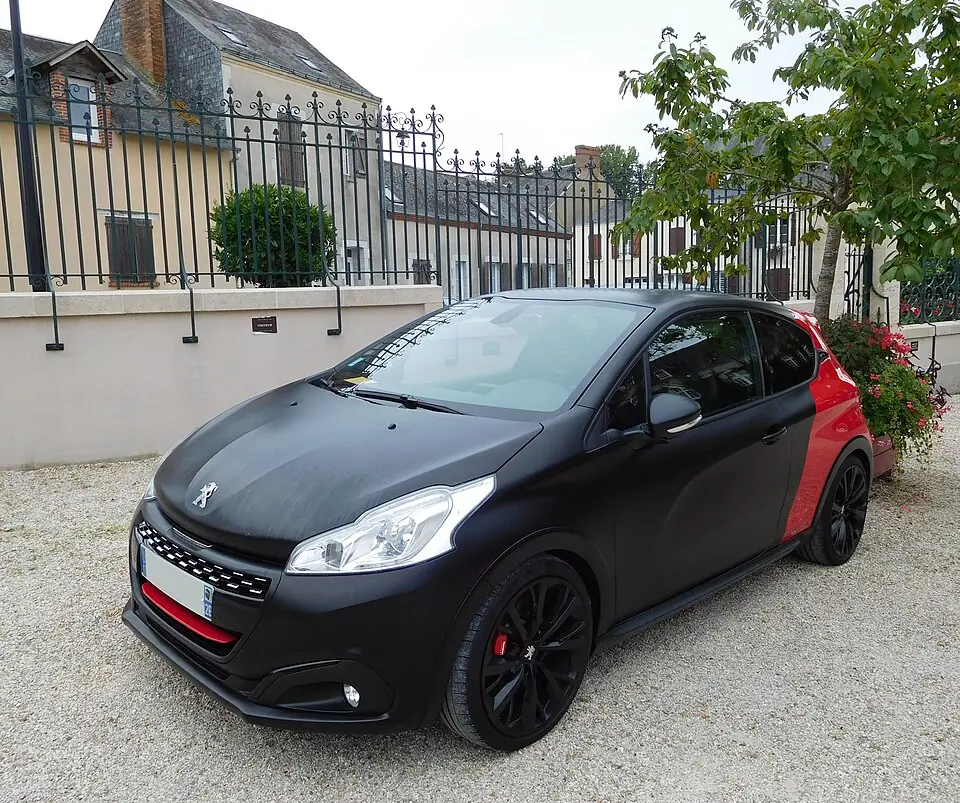
Peugeot 208 GTi (by Peugeot Sport)
Why 8.3: The last Peugeot Sport hot hatch before the brand vanished from enthusiast conversation for a decade — a Torsen diff and a genuinely sharpened chassis on top of the everyday 208. Bought by people who wanted the 205 GTI's reputation in a car they could actually daily, and mostly still do.
Layout
Natural habitat
Ride comfort
Sound
Peugeot Sport gave the 1.6 THP a freer back box and there is a faint turbo hiss under load. But it runs out at 6,000 rpm and the note is a warmed-over supermini's, forgettable an hour after driving it. Ordinary by the standards of this index.
4-cylinder · turbocharged · 6,000 rpm redline · rated 4.5 / 10 for engine sound
Market value
Median asking price, good condition · €27k (2015) → €16k (2026), trending down · illustrative data
Child seats · ISOFIX
Rear ISOFIX anchors are fitted as standard.
Front ISOFIX is a factory option on the 208, not standard — Euro NCAP's table marks it available but not fitted to the test car, alongside a standard airbag cut-off switch.
Euro NCAP Peugeot 208 (2012)
The long version
Peugeot built the 30th Anniversary edition to mark three decades since the 205 GTI, bumped the 1.6 turbo to 208 hp, added a Torsen limited-slip differential and widened the front track — then, finding the reception better than expected, folded the whole package into a permanent ‘by Peugeot Sport’ trim from 2015 onward. It never had a US chapter to speak of; Peugeot left the American market in 1991, so the entire ownership story is European, daily-driven and largely unbothered by speculation. Values slid hard through the late 2010s the way every mainstream turbo hatch's do, then leveled off as the 205 GTI comparison started sticking and buyers began treating it as the modern car that earned the badge rather than just borrowed it. It is bought by people who wanted a Golf GTI rival with more front-end bite, and driven exactly that hard.