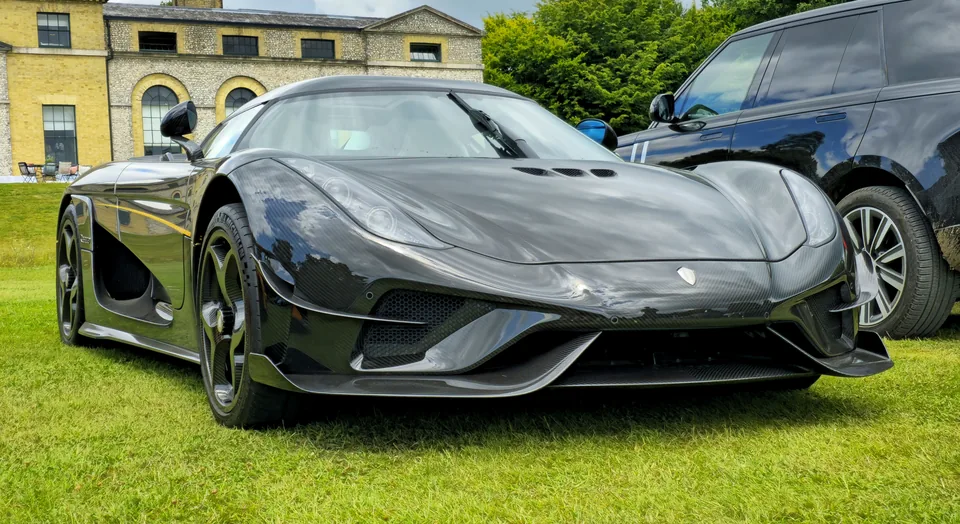
Koenigsegg Regera
Why 3.2: Koenigsegg deleted the gearbox entirely — a single fixed 2.73:1 ratio and three electric motors handle everything from a parking-lot crawl to a claimed 248mph, genuinely radical engineering. It's also an 80-unit, $2M+ hypercar from a marque whose small, enthusiast-heavy client base still mostly parks what it buys.
Layout
Natural habitat
Ride comfort
Sound
The twin-turbo 5.0-litre V8 is loud and the electric motors add a rising whir over the top. But with no gearbox there are no shifts and no rise and fall, so it builds as one continuous surge — volume without rhythm, which strands it mid-scale.
8-cylinder · turbocharged · 7,500 rpm redline · rated 5.5 / 10 for engine sound
Market value
Median asking price, good condition · €1.8M (2016) → €2.9M (2026), trending up · illustrative data
Child seats · ISOFIX
There aren't any — strict two-seater.
Koenigsegg's own technical-specifications page lists the car's safety equipment with no ISOFIX mentioned anywhere.
Koenigsegg's later Gemera markets ISOFIX as new to the marque ("one of the first hypercars" to get it) — circumstantial evidence the two-seat Regera lacks it, though no source states this outright.
Koenigsegg technical specifications (Regera); Koenigsegg Gemera launch materials (owner-community sourced, not manufacturer documentation)
The long version
Direct Drive is the real story here: no clutch, no torque converter, no shift shock, just a hydraulic coupling and three electric motors filling in for a conventional transmission's low-end grunt until the twin-turbo V8 takes over near the top of the rev range. It's the kind of solution only a manufacturer building fewer than 20 cars a year could justify engineering from scratch, and it makes for a genuinely different driving experience — one continuous surge instead of a string of gears. Koenigsegg's small, factory-close customer base does drive its cars more than most hypercar owners, a pattern this index already credits the Agera and Jesko for, and Regera launch-control runs are a fixture at company events. But 80 cars built across six years, at a price that has since climbed toward $3M+ at auction, still adds up to a car that spends most of its life under a cover between the demonstrations.