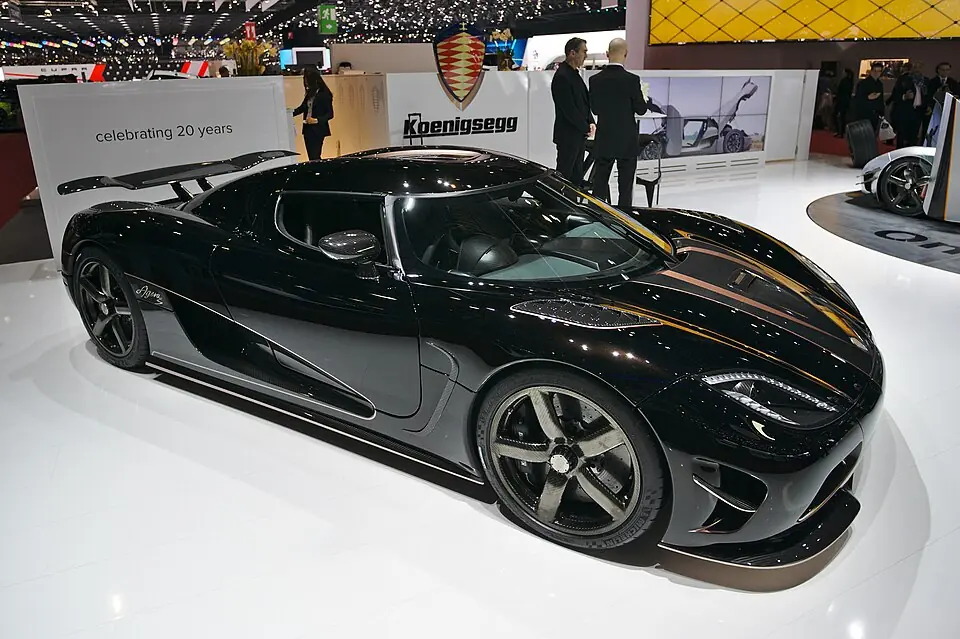
Koenigsegg Agera
Why 3.3: The twin-turbo V8 and Koenigsegg's own dual-clutch box are genuinely engaging, and the chassis backs it up — this is a car that rewards the driver more than its ownership pattern lets on. Extreme rarity and record-chasing headlines do more to keep it garaged than anything about the hardware does.
Layout
Natural habitat
Ride comfort
Sound
A 5.0 twin-turbo V8 on a cross-plane crank venting through one enormous outlet under the rear wing, so spool, wastegate and a hard rumble arrive together. It is capped by turbocharging flattening the 7,500 rpm top end. Violent rather than musical.
8-cylinder · turbocharged · 7,500 rpm redline · rated 7.3 / 10 for engine sound
Market value
Median asking price, good condition · €1.5M (2011) → €2.4M (2026), trending up · illustrative data
Child seats · ISOFIX
There aren't any — strict two-seater.
The only position there is, so makers of this era equip it: expect a passenger-airbag cut-off (key switch or occupant sensing) as standard, because there is no rear row to point children to. Whether the seat itself carries ISOFIX anchors is maker-specific — Porsche bundles them with its child-seat preparation, Ferrari sold them as an option, others are belt-mount only with the airbag off.
Derived from production years and seating layout, not a per-car source. ISOFIX was standardised as ISO 13216 in 1997, required on new EU model types from 2011 and on all new EU cars from 2014.
The long version
Koenigsegg's small, enthusiast-heavy customer base tracks a real share of its cars — this is a marque built on top-speed records and factory test-driver culture, not badge-flipping — but the numbers built are so small and the prices so high that most Ageras still spend the bulk of their lives under a cover between rare outings. Values dipped briefly after the initial run before climbing again as the model's record-setting reputation solidified. A genuine driver's car, owned mostly like a museum piece.