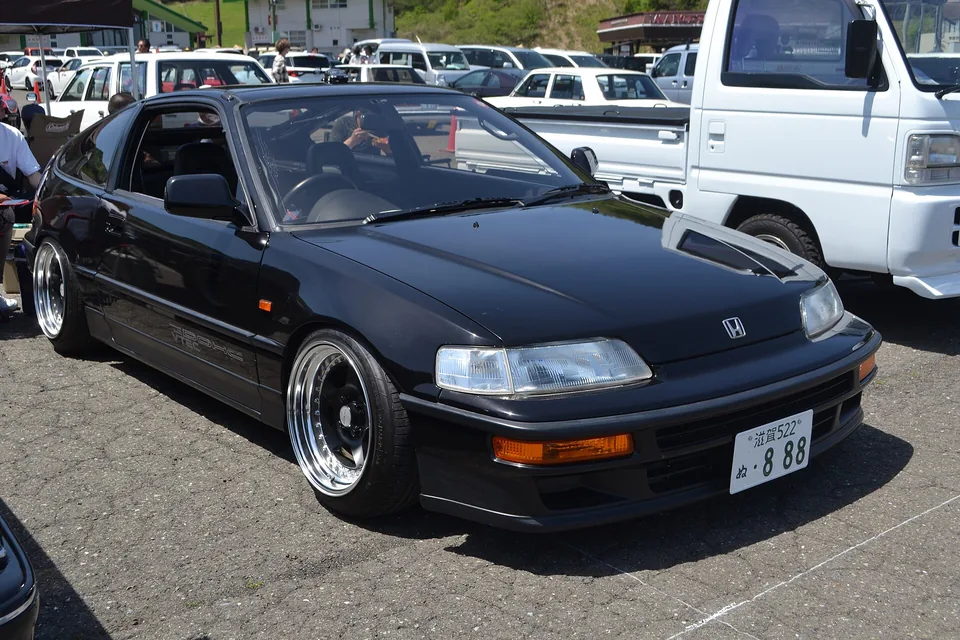
Honda CR-X SiR
Why 5.5: Japan's CR-X got the B16A: 1.6 litres, twin cams, VTEC, and 160 PS at 7,600 rpm in a 986 kg car on double wishbones at all four corners. America's Si got the single-cam D16A6 and 108 hp in the same bodyshell, which is the entire argument for treating these as two cars rather than two trim levels.
Layout
Natural habitat
Ride comfort
Sound
The B16A changes voice completely when the second cam profile engages and holds that shriek to 8,000 rpm with only 986 kg to carry it. But this is the very first B16A rather than the Type R units that followed, so it stops 400 rpm short of the EK9 and a fraction softer. The engine that made VTEC a word people say.
4-cylinder · naturally aspirated · 8,000 rpm redline · rated 7.6 / 10 for engine sound
Market value
Median asking price, good condition · €12k (1990) → €26k (2026), trending up · illustrative data
Child seats · ISOFIX
Built before ISOFIX existed, so there are no anchor points at all. A child seat here is a seatbelt installation in the only passenger seat there is.
Derived from production years and seating layout, not a per-car source. ISOFIX was standardised as ISO 13216 in 1997, required on new EU model types from 2011 and on all new EU cars from 2014.
The long version
When Honda facelifted the CR-X in September 1989 it added a model Americans could read about and not buy. The B16A had appeared a few months earlier in the Integra XSi, making the CR-X the second car to carry a DOHC VTEC engine, and the numbers were genuinely startling for 1989: 160 PS and 152 Nm from 1.6 naturally aspirated litres, at a specific output European manufacturers would not match for another decade. Put that in a car weighing 986 kg with double wishbones front and rear and unassisted steering and you have the template every fast Honda since has been measured against. The US market got the same shell with a single-cam 108 hp engine and the same excellent chassis, which is why American CR-X owners spent the following twenty years swapping VTEC engines into them — the shell was always ready for it, the factory just never sold it that way. That has become the problem with the surviving SiRs: most were modified, many were raced, and the pool of unmolested cars is tiny. Prices have moved accordingly and fast, and the miles-driven and not-flipped numbers here are the lowest in this batch because a clean EF8 is now an asset first. It is the only entry in this group where the market has genuinely started to get in the way of the car.