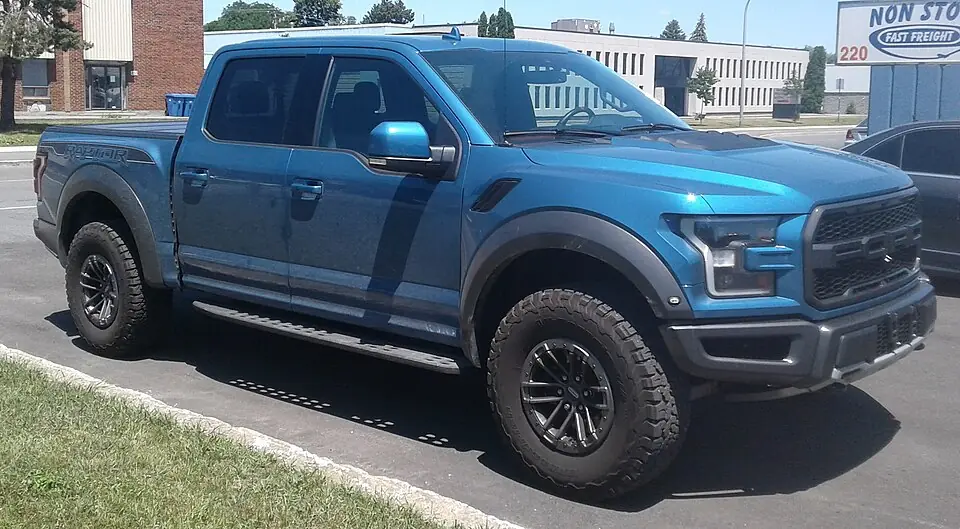
Ford F-150 Raptor
Why 7.3: Doug's numbers actually undersell it — Acceleration and Handling both land mid-pack, but Fun Factor still hits 7, which is the whole story: this isn't a drag-strip trim, it's a desert-racing trim, and the metric that matters doesn't show up in a parking lot.
Layout
Natural habitat
Ride comfort
Sound
The EcoBoost V6 has a low turbocharged growl and the exhaust is tuned to make the most of it. But it is a six-cylinder truck engine with active noise control and speaker enhancement filling the gaps, which is why Ford later built the V8 Raptor R.
6-cylinder · turbocharged · 6,500 rpm redline · rated 3.8 / 10 for engine sound
Market value
Median asking price, good condition · €46k (2017) → €49k (2026), trending up · illustrative data
Child seats · ISOFIX
SuperCrew rear bench: LATCH lower anchors at both outboard seats, top tethers across the row — standard F-150 hardware carried straight over to Raptor.
No LATCH hardware up front.
Early Raptors offered a SuperCab with a smaller rear bench and tighter clearance for bulky convertible seats; later model years are SuperCrew-only.
FMVSS 225 (US federal LATCH mandate, lower anchors + top tether required from Sept 2002) (owner-community sourced, not manufacturer documentation)
The long version
Ford built the Raptor off its own Baja racing program, and the long-travel Fox Live Valve suspension underneath is genuinely tuned for jumping whoops at speed, not a badge-engineered appearance package on a regular F-150. That heritage shows up in the resale numbers: unlike most trucks, the Raptor holds value hard enough that used examples routinely sit near what they cost new, a pattern collector cars get and work trucks almost never do. Owners buy it to actually go find the rough road, and the desert-trip mileage on used listings backs that up more than any spec sheet could.