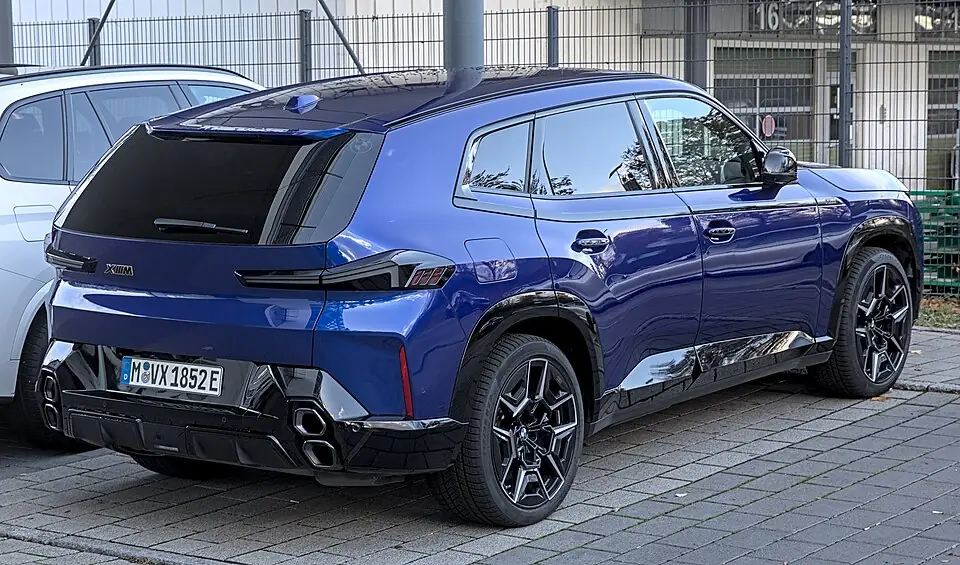
BMW XM
Why 5.3: 644 hybrid horsepower and the heaviest curb weight BMW has ever built, wrapped in styling nobody asked for. Depreciation is already running ahead of anything else wearing the M badge — the identity crisis shows up on the balance sheet as fast as it does on the road.
Layout
Natural habitat
Ride comfort
Sound
The S68 twin-turbo V8 is thoroughly muffled, and most of what reaches the cabin is IconicSounds Electric, a Hans Zimmer composition played through the speakers. It is well made and entirely synthetic. A V8 badge with a soundtrack laid over the top.
8-cylinder · turbocharged · 6,500 rpm redline · rated 2.6 / 10 for engine sound
Market value
Median asking price, good condition · €146k (2023) → €66k (2026), trending down · illustrative data
Child seats · ISOFIX
Two outer second-row ISOFIX positions expected, in line with the shared X5/X7-family SUV platform; middle belt-only.
No front-passenger ISOFIX, matching every current BMW.
No XM-specific compatibility document located — based on the shared CLAR-SUV family pattern.
Extrapolated from BMW X5/X7-family SUV ISOFIX pattern; no XM-specific document located (owner-community sourced, not manufacturer documentation)
The long version
BMW built the XM to be simultaneously an M car, a flagship luxury SUV and a plug-in hybrid statement, and the ownership base has reacted the way a car with no clear audience usually does: nobody is fighting for one. M loyalists call it too heavy and too synthesized to earn the badge; luxury buyers find the styling too aggressive for the price; the eco-conscious crowd wanted something fully electric instead. What's left is a car losing value faster than any other current BMW, roughly 60 percent inside five years, driven mostly for the school run rather than anything the M badge usually implies.