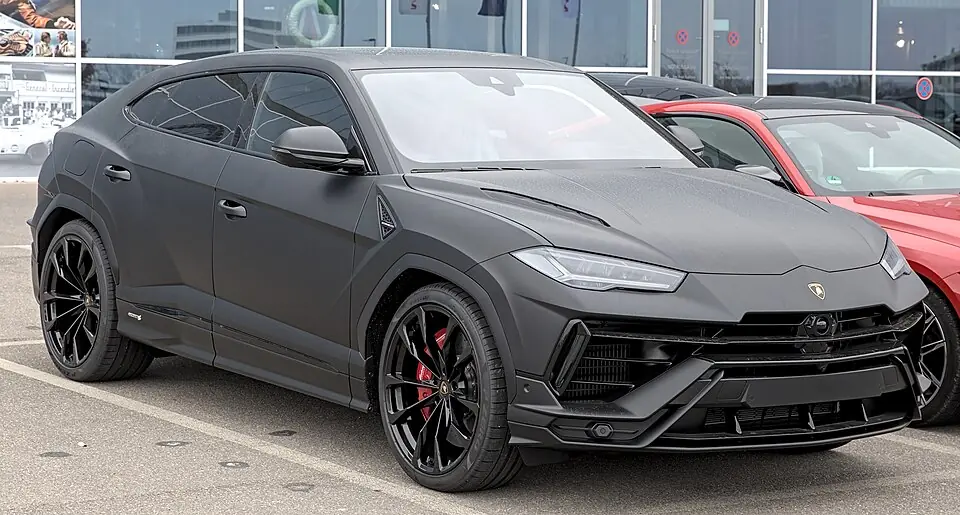
Lamborghini Urus
Why 4.0: A genuinely capable chassis under a badge exercise: most are optioned for the valet line, not the canyon. Doug scored it 71 — as a car it's excellent; as a purchase it's a statement.
Layout
Natural habitat
Ride comfort
Sound
Lamborghini gave the group 4.0 twin-turbo a louder and boomier exhaust than anything else on the platform, and the overrun cracks are entertaining. But the hardware is shared with an RS Q8, the turbos flatten the top end, and part of it arrives through the speakers.
8-cylinder · turbocharged · 6,800 rpm redline · rated 6.4 / 10 for engine sound
Market value
Median asking price, good condition · €221k (2019) → €207k (2026), trending down · illustrative data
Child seats · ISOFIX
Two ISOFIX positions on the outer rear seats, the outer pair being the ones the standard covers.
The rear anchors are the supported route — the manual points child seats there, and front-passenger ISOFIX is the exception rather than the rule. A belt-mounted seat up front needs the airbag off, and cars with a rear row don't always fit a deactivation switch, precisely because the rear seats exist.
Derived from production years and seating layout, not a per-car source. ISOFIX was standardised as ISO 13216 in 1997, required on new EU model types from 2011 and on all new EU cars from 2014.
The long version
Values held up remarkably well for a $200k-plus SUV, barely off sticker after seven years, which says the buyer pool is not shopping on driving dynamics at all; a car people actually track or thrash tends to show more wear on the resale chart, not less. The Sant'Agata badge does the selling here, and the ownership pattern that follows looks a lot like the G-Wagen's: valet lines, city miles, options chosen for visibility rather than the canyon. Valet Royalty is earned honestly. Doug's score confirms the hardware is real; the index score confirms almost nobody is asking it to prove that.