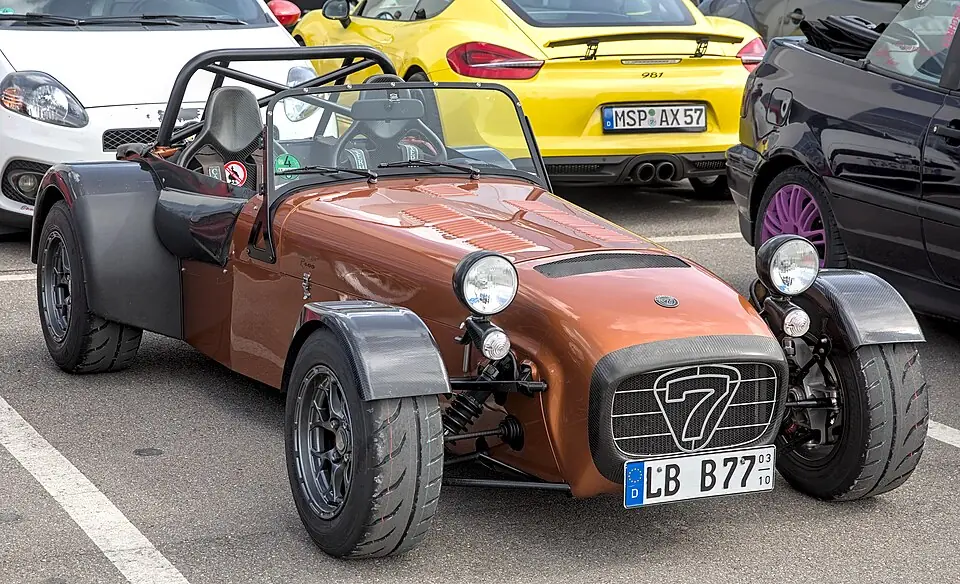
Caterham Seven
Why 7.8: Fifty years of the same answer: nothing but driving. Zero badge value, zero speculation, near-universal track use. This is the 10 the whole index is measured against — it loses points only to weather.
Layout
Natural habitat
Ride comfort
Sound
There is no bodywork, no insulation and a side-exit exhaust a hand's width from your elbow, so every combustion event arrives unfiltered on the way to 7,500 rpm. The Ford four goes manic and harsh rather than melodic, so this is raw access more than a great engine.
4-cylinder · naturally aspirated · 7,500 rpm redline · rated 8.4 / 10 for engine sound
Market value
Median asking price, good condition · €41k (2015) → €51k (2026), trending up · illustrative data
Child seats · ISOFIX
There aren't any — strict two-seater.
No anchors, and on most of these no passenger airbag either — the car is too stripped for the question to arise. Whatever goes in that seat goes in on a harness or a belt.
Derived from production years and seating layout, not a per-car source. ISOFIX was standardised as ISO 13216 in 1997, required on new EU model types from 2011 and on all new EU cars from 2014.
The long version
Half the ownership experience happens before the first drive; plenty of these arrive as a kit and get bolted together in a garage over a winter, which filters out anyone who wanted a car rather than a project. Club racing absorbs a huge share of the fleet, and the modest, steady value climb since 2015 looks nothing like the speculative charts elsewhere in this index; nobody is flipping a Seven for auction money. Smiles per Dollar and Track Rat are self-explanatory; Endangered Stick just confirms Caterham never considered building it any other way. Ask any owner what keeps the car parked, and the answer is never resale.