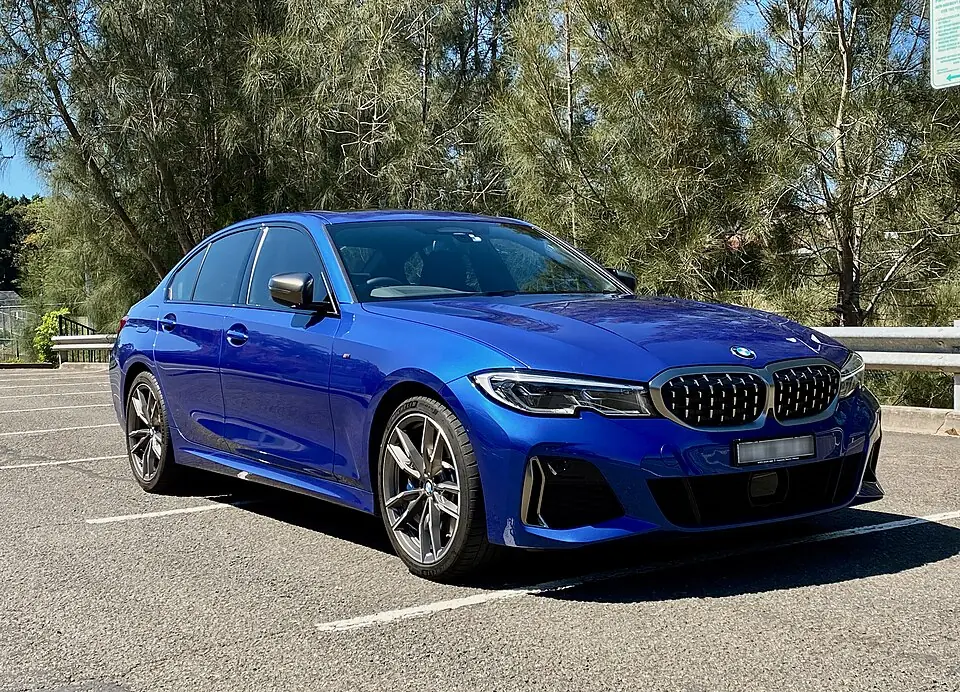
BMW M340i
Why 7.3: 382 hp from a single-turbo inline-six that undercuts the M3 by twenty grand and most of the ownership drama — no manual, but nobody buying this was going to cross-shop a stick anyway. Bought to be driven daily, and the depreciation curve proves it.
Layout
Natural habitat
Ride comfort
Sound
The B58 has real straight-six depth under load and a well-judged overrun crackle in Sport. But most of what you hear inside arrives through the speakers, the turbo flattens the top end, and from outside the car is nearly silent. Convincing only from the driver's seat.
6-cylinder · turbocharged · 6,500 rpm redline · rated 5.3 / 10 for engine sound
Market value
Median asking price, good condition · €50k (2020) → €34k (2026), trending down · illustrative data
Child seats · ISOFIX
Two outer ISOFIX positions on the 3-place rear bench, middle seat belt-only — standard mainstream-BMW layout for this generation.
No front-passenger ISOFIX, matching every G-series BMW.
G20-generation 3-Series ISOFIX pattern (mainstream EU family-sedan segment norm, EU ISOFIX mandate); no model-specific document located (owner-community sourced, not manufacturer documentation)
The long version
BMW built the M340i as the car for buyers who wanted M-adjacent performance without an M-badge insurance premium or an M-badge price, and the formula worked well enough that enthusiast forums spent years arguing about whether it was actually quicker in the real world than the pricier M3 it sat below. No manual was ever offered, which quietly filtered out the purist crowd before they even test-drove one, leaving an ownership base that wanted a fast, comfortable daily and got exactly that. It shows up in how these get used: commuted, road-tripped, occasionally tracked, rarely garaged for its own sake, because nobody paid a six-figure sum for a car they felt obligated to preserve. Depreciation has followed an ordinary German-sport-sedan path, which is itself the tell — this was bought to be driven, not speculated on.