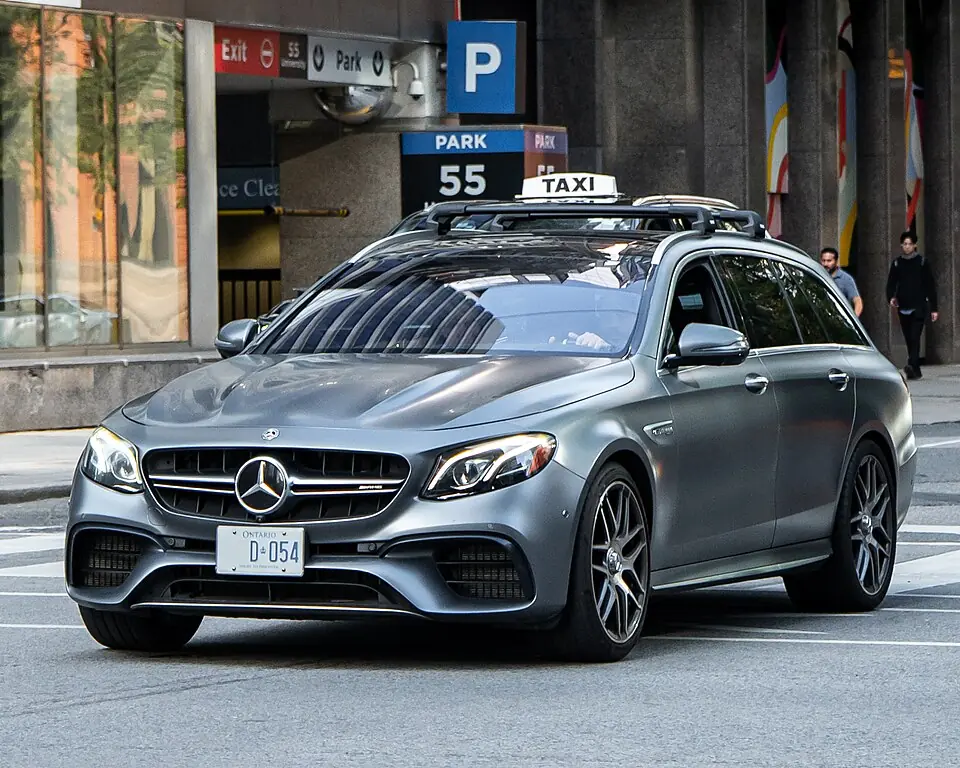
Mercedes-AMG E 63 S Estate
Why 8.3: Choosing the wagon over the SUV is itself an enthusiast statement. Owners use all five seats and most of the 612 hp; depreciation curve says workhorse, not trophy.
Layout
Natural habitat
Ride comfort
Sound
The 4.0 twin-turbo has the deepest bark of any current AMG V8 and the overrun crackle in the sharper modes is real theatre. But the turbos sit inside the vee where the induction noise should be, so it never builds the way the naturally aspirated 6.2 did.
8-cylinder · turbocharged · 7,000 rpm redline · rated 7.1 / 10 for engine sound
Market value
Median asking price, good condition · €87k (2018) → €53k (2026), trending down · illustrative data
Child seats · ISOFIX
Two ISOFIX anchors on the outer rear seats; the middle rear position is belt-only, same layout as the previous S212-generation estate.
No ISOFIX on the front passenger seat — Mercedes keeps the anchors rear-only across the E-Class range.
Mercedes E-Class Coupe owner's manual pattern (ManualsLib) + prior-generation S212 E-Class Estate ISOFIX confirmation (owner-community sourced, not manufacturer documentation)
The long version
New, this was a six-figure statement purchase; five years later it is a Bargain Window car that a used buyer picks up for family-hauler money and still gets all 612 horsepower attached. That collapse in value, nearly 40 percent off sticker by 2022, is exactly what happens to a niche body style nobody is speculating on, which paradoxically makes the second owner the more honest enthusiast: they bought it purely because they wanted the wagon. Depreciation Hero and Daily Driven both point at the same used-market reality, a car that hauls kids, groceries and a genuinely quick engine in equal measure, with no collector pretensions attached.