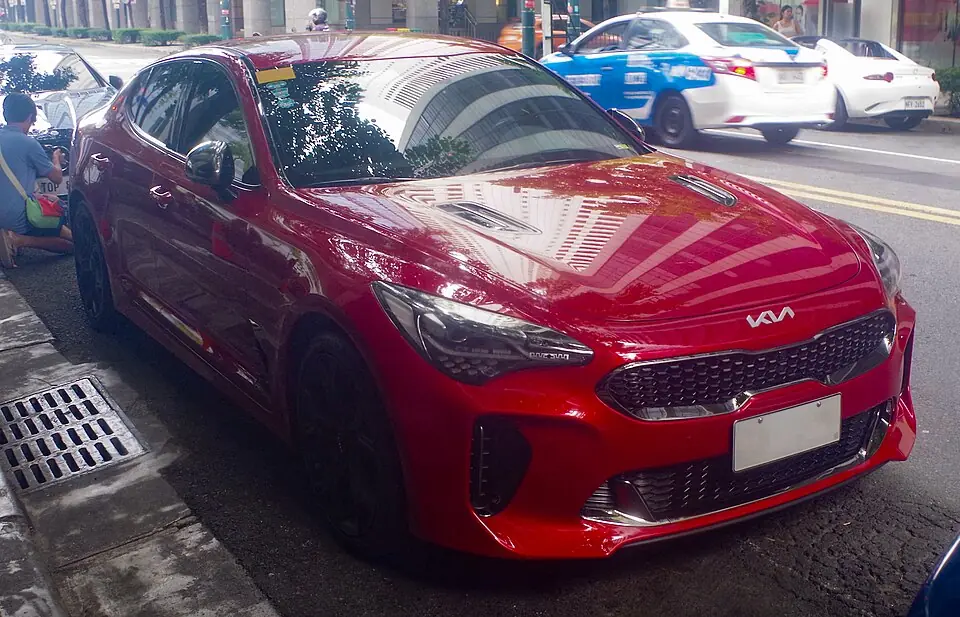
Kia Stinger GT
Why 7.3: A proper twin-turbo V6 and a rear-drive-based chassis for German-sedan money saved — road testers loved the value case and consistently flagged the electric steering as the part Kia didn't finish. Steep depreciation means nobody's holding one as an investment; they're bought to drive and driven accordingly.
Layout
Natural habitat
Ride comfort
Sound
The 3.3 twin-turbo V6 has real shove but almost no exhaust voice — the growl owners hear is played through the under-seat subwoofers and tracks engine speed. Honest hardware, dishonest noise. It lands with the augmented cars, not the real ones.
6-cylinder · turbocharged · 6,750 rpm redline · rated 3.4 / 10 for engine sound
Market value
Median asking price, good condition · €35k (2018) → €22k (2026), trending down · illustrative data
Child seats · ISOFIX
Both rear outboard seats carry ISOFIX/i-Size anchors as standard fit; IIHS separately confirms two full LATCH positions (lower anchors + tether) plus a tether-only rear center position.
Euro NCAP's factory test lists the front passenger seat as not fitted for ISOFIX or i-Size child seats.
IIHS rated LATCH ease-of-use only 'Marginal' — the lower anchors sit too deep in the seat bight to reach easily, even though clip-on force itself is low.
Euro NCAP Kia Stinger test (2017, GT-Line 2.2 CRDi) + IIHS Kia Stinger LATCH ease-of-use rating (2022 MY)
The long version
Bought by people who read the comparison tests and kept the savings, the Stinger lives a fast-commuter life: highway miles, family duty, the occasional on-ramp reminder of why they chose the twin-turbo. Kia discontinued it without a successor, which made the last GTs minor cult objects but never investments — depreciation did its usual work and made the used car the real value story. Daily miles, zero speculation, modest feedback: a perfectly honest mid-table score.