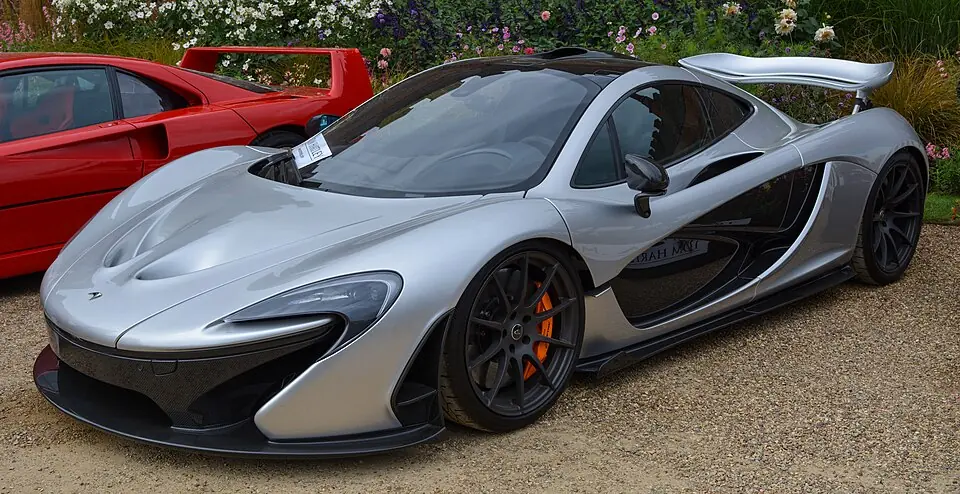
McLaren P1
Why 3.0: The wildest of the trinity to drive and the least driven of the three — IPAS, DRS, and delivery mileage. The famous exceptions who lap theirs make headlines precisely because they're exceptions.
Layout
Natural habitat
Ride comfort
Sound
The M838TQ hardens up genuinely towards 8,250 rpm and you hear the turbos spooling and dumping right behind the bulkhead. But McLaren insulated this one properly, and it is the thinnest of the hybrid trinity by a wide margin. The one thing the P1 does not do well.
8-cylinder · turbocharged · 8,250 rpm redline · rated 6.9 / 10 for engine sound
Market value
Median asking price, good condition · €1.3M (2015) → €1.5M (2026), trending up · illustrative data
Child seats · ISOFIX
There aren't any — strict two-seater.
No ISOFIX; the same capacitance-mat occupant classification system as the rest of the range deactivates the passenger airbag for a child seat, and McLaren states the airbag was tested for small-child out-of-position deployment.
McLaren P1 Owner's Handbook
The long version
Values cratered for most of a decade after launch before the recent run reversed course, and the ownership churn behind that curve is the tell — this is a car that changes hands on spec sheets and reveal videos more than on lap times. Long-term keepers exist, but the broker network sees more P1s than any track marshal does, each sale pitched as the next floor. The active-aero party pieces get demonstrated in driveways for camera phones; the DRS button mostly stays a talking point rather than a tool anyone needed.