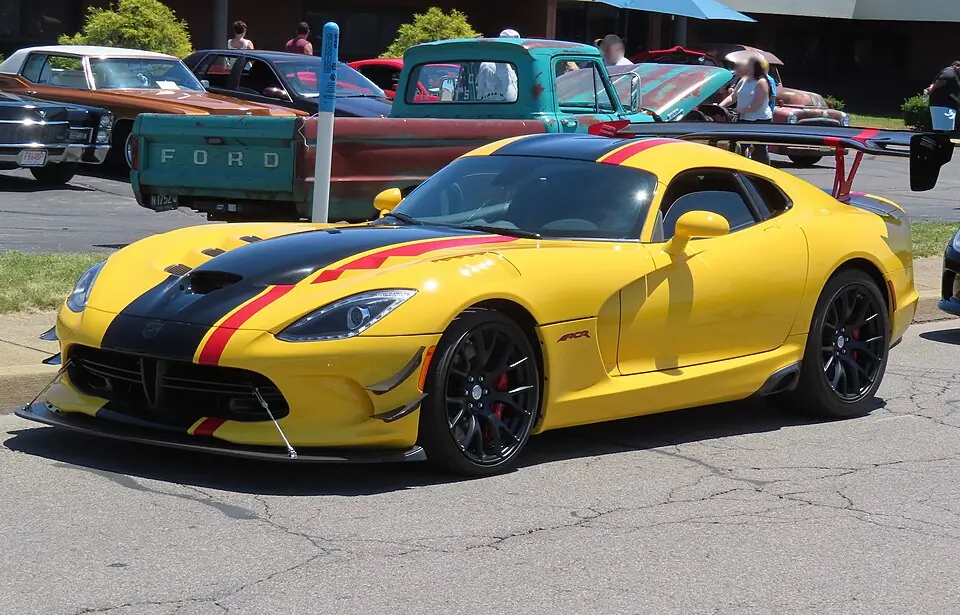
Dodge Viper ACR (Gen V)
Why 5.3: Manual-only, 8.4 litres, and a stack of production-car lap records set partly by owners' crowdfunded efforts. Track-day sightings per car built are among the highest here — the anti-Aventador.
Layout
Natural habitat
Ride comfort
Sound
The 8.4-litre V10 exits through side pipes under the doors, so the noise arrives before the car does — a hard, uneven ten-cylinder hammering nothing else makes. It is capped by a 6,400 rpm limit and the same agricultural edge as the GTS. A shade above that car.
10-cylinder · naturally aspirated · 6,400 rpm redline · rated 7.2 / 10 for engine sound
Market value
Median asking price, good condition · €110k (2017) → €202k (2026), trending up · illustrative data
Child seats · ISOFIX
There aren't any — strict two-seater.
There's a top-tether anchor behind the passenger seat under an access cover, but no lower anchors turn up anywhere in the manual or owner accounts — a tether point alone doesn't make this a LATCH position.
Two-seater — whatever restraint provision exists is at the only seat there is.
2016 Dodge Viper Owner's Manual (Child Restraints section) (owner-community sourced, not manufacturer documentation)
The long version
Buyers skew toward people who already own a trailer, because the ACR's reputation was built one grudge-match lap record at a time and owners kept showing up to defend it long after Dodge stopped funding the effort itself. Values have climbed steadily since production ended, but the cars keep turning up at time-trial paddocks instead of disappearing into collections — the wing and splitter are tools, not styling cues, and the market seems to understand that. It is the rare American flagship where the enthusiast base and the investor base are mostly the same people.